The most important thing in brief:
What is an ISMS? (ISMS definition)
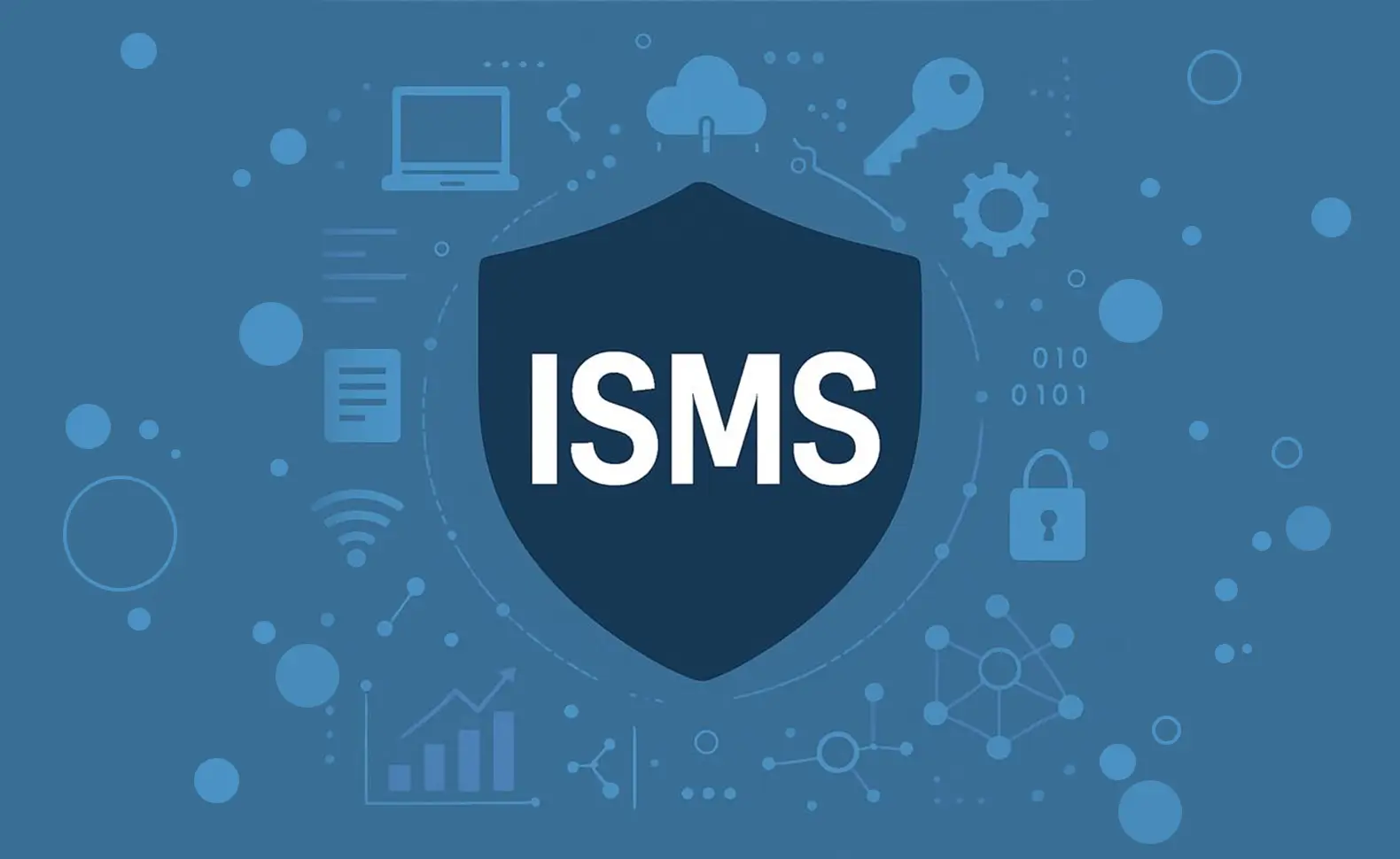
A ISMS (information security management system) is a systematic approach to ensure information security within a company. It comprises Guidelines, procedures and technical measures, which ensure that sensitive data is protected, the integrity of systems is maintained, and the availability of information is ensured.
Definition of ISMS: According to ISO/IEC 27001 — the internationally recognized standard — an ISMS is a framework that helps companies identify their security risks, implement appropriate measures and regularly review them.
ISMS meaning in a corporate context
- Protection against cyber attacks and data loss
- Compliance with legal requirements such as the GDPR or industry-specific regulations
- Strengthening customer confidence through verifiable safety standards
- Structured risk assessment and continuous improvement of IT security
Especially in times of increasing digitization, it is becoming clear why ISMS is essential today.
Why ISMS is necessary
The threat situation in cyberspace is constantly growing: phishing, ransomware and insider threats have long been part of everyday life in IT. Add legal and regulatory requirements, which oblige companies to deal professionally with information security.
Relevant legal requirements
- GDPR (General Data Protection Regulation): requires technical and organizational measures to protect personal data.
- BSI IT Baseline Protection: represents a recognized framework for information security in Germany.
- ISO/IEC 27001: internationally valid standard for the introduction and certification of an ISMS.
Anyone who does not meet these requirements risks not only high fines, but also serious competitive disadvantages.
Development and implementation of an ISMS
The introduction of an ISMS takes place in several steps and is not a one-time project, but a continuous process.
The core components of an ISMS
- Risk management: Identification, analysis, and evaluation of risks.
- Security guidelines: Development of clear guidelines for employees and processes.
- Technical measures: e.g., firewalls, encryption, access rights.
- Training and awareness raising: Employees must understand why ISMS is important.
- Continuous review: Regular audits and improvement measures.
Practical procedure
- Initial inventory: Which systems, data, and processes exist?
- Risk assessment: What are the biggest weaknesses?
- Action planning: Which technical and organizational solutions are necessary?
- Implementation: Implementation of security measures.
- Monitoring and reporting: Continuous monitoring and improvement.
A practical real-world example
A mid-sized company fell victim to a cyberattack: Confidential customer data ended up in the hands of hackers, production processes came to a standstill, and customer trust was severely shaken. The damage: six-figure losses due to downtime, fines for data breaches, and almost incalculable reputational damage. Management could have prevented all of this — with an effective ISMS.
This example clearly demonstrates that information security is no longer a nice-to-have, but a business-critical factor. An ISMS is the central tool for systematically identifying, assessing, and sustainably minimizing risks.
Benefits of an ISMS for companies
An effective ISMS provides companies with a variety of benefits that extend far beyond mere IT security:
- Holistic transparency: An ISMS provides a structured overview of data flows, systems, and responsibilities.
- Legal and compliance security: Companies meet regulatory requirements more easily and can provide evidence during audits.
- Minimize risks: Risks are identified early on and can be reduced in a controlled manner.
- Increasing efficiency: Clear processes and defined responsibilities ensure smoother daily IT operations.
- Competitive advantage: Customers and partners trust companies that demonstrably have their information security under control.
ISMS implementation challenges
Despite the benefits, there are also challenges that companies should consider:
- Resource requirements: The introduction of an ISMS requires time, budget, and know-how.
- Complexity of the IT landscape: The larger the company, the more difficult it is to maintain a clear overview.
- Employee acceptance: Security guidelines must be implemented — without acceptance, the effect fizzles out.
This shows that anyone who focuses on automation and transparency right from the start reduces effort and increases efficiency.
Conclusion: ISMS as a success factor for modern companies
An ISMS is more than just a compulsory exercise — it is a decisive competitive advantage. Companies that systematically ensure information security protect not only their data, but also their reputation and business continuity.
In short: Anyone who wants to establish an effective ISMS today not only creates security, but also lays the foundation for sustainable business success.
FAQs
Lay the foundation now
See for yourself how easy it is to set up an ISMS. The free trial version of Docusnap provides you with the ideal basis for closing security gaps, analyzing protection requirements and meeting legal requirements.
Try it now for free!